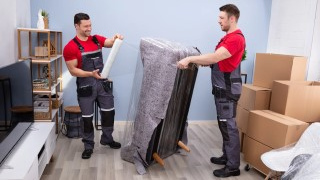
Moving to a new home involves a logistical mountain of tasks, but nothing requires quite as much delicate precision as figuring out how to pack artwork and paintings for moving safely. Unlike sturdy furniture or standard kitchenware, art pieces are susceptible to a wide range of environmental and physical threats. A single scratch on a vintage oil painting or a crack in a framed glass print can significantly diminish both its financial value and its sentimental worth. Many DIY movers make the mistake of treating paintings like any other flat object, often leading to irreversible damage from pressure, moisture, or improper wrapping materials. Whether you are moving a small collection of personal sketches or a gallery's worth of valuable investment pieces, the approach must be systematic and specialized. Moveshire stands as a premier moving partner with years of experience in handling high-value items, offering the expertise needed to ensure your collection arrives at its destination in pristine condition. By following professional protocols, you can navigate the complexities of transit and protect your cultural assets from the rigors of the road.

Why Proper Art Packing Matters More Than You Think
When artwork is in transit, it faces a variety of "invisible" dangers that the average person might not consider. The primary risk is mechanical impact, but vibrations from the moving truck can also cause structural fatigue in frames or lead to paint flaking if the piece is already aged. Furthermore, moisture and humidity fluctuations can cause canvases to expand or contract, potentially leading to warping or the growth of mold. Standard packing methods used for books or clothes simply do not provide the structural integrity required to shield a delicate canvas from these forces.
The financial and sentimental value of artwork often far exceeds that of other household items. An original painting is irreplaceable; while you can buy a new television if one breaks, you cannot replace the unique brushstrokes of a commissioned artist or a family heirloom. Standard boxes are often too thin to prevent punctures, and regular plastic wrap can trap moisture against the paint, causing it to "sweat" and eventually peel. To learn more about how to prevent damage during a move, including art and fragile items, Moveshire has additional resources available. Understanding that art is an investment in beauty and history is the first step toward committing to a professional packing strategy.
Essential Supplies for Packing Artwork and Paintings for Moving
Before you begin the process, you must gather the correct materials. Using the wrong tape or paper can be just as damaging as no protection at all. To answer the common question of "what do I need," here is a comprehensive list of professional-grade supplies.
Boxes and Containers for Art
Selecting the right exterior shell is the foundation of art safety. You should look for the following specialized options:
- mirror and picture boxes: these are heavy-duty, flat boxes designed specifically for framed items;
- telescoping boxes: these consist of two pieces that slide over one another, allowing you to adjust the height for a custom fit;
- adjustable art boxes: similar to telescoping boxes, these provide extra corner reinforcement for heavy frames;
- wooden crates: for extremely high-value or oversized pieces, custom-built wooden crates provide the ultimate level of protection against crushing.
Protective Wrapping Materials
The layers that touch the artwork are the most critical. You must ensure they are chemically stable and physically soft.
|
Material |
Purpose |
|
Acid-free glassine paper |
The primary layer for oil and acrylic paintings to prevent sticking and chemical reactions. |
|
Bubble wrap |
Provides shock absorption. Always use the "bubbles out" method to avoid leaving circular marks on the art. |
|
Foam corner protectors |
Prevents the corners of frames from chipping or breaking through the box. |
|
Painter's tape |
Used specifically on glass fronts; it leaves no residue and is easy to remove. |
|
Packing blankets |
Used for very large pieces that do not fit into standard boxes to provide a thick cushion. |
How to Prepare Your Artwork Before Packing
Preparation is a step often skipped by DIY movers in a hurry, yet it is essential for insurance purposes and long-term preservation. You should never pack a dirty or undocumented piece of art. If you are unsure what to pack first when moving, artwork and fragile valuables should always be addressed early in your packing timeline.
Clean and Inspect Each Piece
Before any paper touches the surface, use a soft microfiber cloth or a specialized soft-bristle brush to gently remove dust. If you pack dust along with the painting, the friction during transit can act like sandpaper, creating micro-scratches on the varnish or glass. During this cleaning phase, perform a detailed inspection. Look for existing scratches, chips in the frame, or loose canvas tension. Knowing the "pre-move" state of your art is vital for verifying its condition upon arrival.
Document and Photograph Your Artwork
Photography is your best friend when it comes to insurance claims. If a piece is damaged during the move, you will need "before" photos to prove the condition. Moveshire recommends the following documentation steps:
- take high-resolution photos of the front, back, and all four corners;
- photograph any existing damage so it is not confused with new transit damage;
- take a photo of any artist signatures or labels on the back of the canvas;
- keep an inventory spreadsheet that includes the artist's name, dimensions, and estimated replacement value;
- store a digital copy of these records in the cloud for easy access.

How to Pack Framed Artwork for Moving
Knowing how to pack framed artwork for moving is a skill that combines physics and patience. Follow these six steps to ensure your framed pieces remain intact.
Step 1: Protect the Glass Front
If the frame has a glass front, use painter's tape to create an "X" or a grid pattern across the surface. This does not prevent the glass from breaking, but it does ensure that if the glass shatters, the shards stay held together by the tape rather than falling inward and slicing the artwork itself.
Step 2: Add Foam Corner Protectors
Corners are the most vulnerable part of any frame. Slide cardboard or foam corner protectors onto all four corners. These ensure that even if the box is dropped on its edge, the impact is absorbed by the protector rather than the frame's mitered joints.
Step 3: Wrap in Acid-Free Paper or Glassine
Wrap the entire frame in acid-free paper. Ensure the tape you use to secure the paper only touches the paper itself, never the frame or the artwork. This layer protects against dust and minor moisture changes.
Step 4: Add a Layer of Bubble Wrap
Wrap the piece in at least two layers of bubble wrap. Ensure the bubbles face outward. The flat side of the wrap should be against the paper layer. This provides the necessary cushioning for the journey.
Step 5: Place in the Right Box
Slide the wrapped artwork into a picture box. If there is any movement when you wiggle the box, fill the gaps with crumpled packing paper. The artwork should be snug but not under extreme pressure.
Step 6: Seal and Label the Box
Seal all seams of the box with heavy-duty packing tape. Use a bold marker to label the box as "FRAGILE," "ARTWORK," and "THIS SIDE UP." Clearly mark which room it belongs in at the new location.

How to Pack Oil Paintings for Moving
Oil paintings are particularly temperamental due to the nature of the medium. Even decades after they are finished, oil paint can remain slightly pliable or become brittle depending on the environment. Therefore, packing oil paintings for moving requires an understanding of chemical stability.
The most important rule is to never wrap an oil painting face-to-face with another painting or directly in plastic. Plastic wrap can trap heat and humidity, which may cause the paint to soften and stick to the plastic, leading to catastrophic paint loss when unpacked. Instead, always use glassine paper as the first layer. Glassine is air-permeable and pH-neutral, making it safe for delicate oil surfaces. If you are handling unframed oil canvases, you must decide between rolling or flat-packing. Small canvases should stay on their stretchers and be flat-packed. For extremely large, unframed canvases, they can be rolled around a wide-diameter tube with the paint side facing outward to prevent cracking. However, Moveshire recommends that for any valuable oil painting, you should consider professional crating to mitigate risks associated with temperature and humidity sensitivity during long-haul trips.
How to Pack Acrylic Paintings for Moving
While often viewed as more durable than oils, acrylics have their own set of challenges. When considering how to pack acrylic paintings for moving, you must account for the fact that acrylic paint is essentially a plastic polymer. In high temperatures, such as the back of a moving truck in July, acrylic paint can become "tacky" or sticky.
Avoid placing bubble wrap directly against the acrylic surface, as the heat can cause the bubble pattern to permanently emboss itself into the paint. The ideal sequence for acrylics is a layer of glassine paper, followed by a stiff sheet of acid-free cardboard over the face, and then the bubble wrap. This "hard-shell" approach ensures that even if the paint softens slightly, nothing is pressing into it to leave an impression. Always keep acrylic paintings in a climate-controlled environment whenever possible, as they can become brittle and crack in extreme cold (below 40 degrees Fahrenheit).
Best Way to Pack Canvas Paintings for Moving
The best way to pack canvas paintings for moving depends on whether the canvas is stretched on a frame or "loose." For stretched canvases, the greatest danger is a puncture. A sharp corner of another box can easily pierce through the back or front of the fabric.
To prevent this, use the cardboard backing technique. Cut two sheets of heavy-duty cardboard slightly larger than the canvas and sandwich the painting between them after it has been wrapped in glassine. This creates a rigid barrier that resists punctures. If you are moving unstretched canvases, rolling them is an option, but it must be done carefully. Use a tube with at least a 6-inch diameter; rolling too tightly can cause the ground layer of the canvas to delaminate or the paint to flake. For the highest level of safety, specialty canvas boxes-which are thinner than standard boxes but much stronger-should be used for each individual piece.
How to Pack Large Artwork for Moving
Oversized pieces present a physical challenge due to their weight and awkward dimensions. When packing large artwork for moving, the standard store-bought boxes often won't suffice. You will likely need to build a "custom cardboard sandwich." This involves taking large sheets of double-walled cardboard, placing the wrapped artwork between them, and taping the edges together to form a custom-sized sleeve.
For pieces that are larger than 48–60 inches, a wooden crate is often the only safe way to transport them. Handling these pieces requires at least two people to avoid bending the frame or dropping the item. When loading them into the truck, never lay large artwork flat. The weight of the frame and glass can cause the center to sag and eventually break. Instead, always store them vertically. Moveshire's team utilizes specialized equipment and non-slip floor padding to ensure that even the largest gallery pieces are secured firmly against the walls of the truck, preventing any shifting during the move. For those relocating an entire home, our residential moving and house moving services are fully equipped to handle large-scale art collections.

Loading and Transporting Artwork in the Moving Truck
The loading phase is where most accidents happen. Even a perfectly packed box can be ruined if it is placed under a heavy crate of books. Follow these professional loading rules:
- always transport paintings on their edge (vertically), never flat. Vertical orientation allows the frame to support the weight and handle the vibrations of the road better;
- secure the boxes between heavy, stable items like a sofa and the wall of the truck, ensuring they cannot tip over;
- use tie-down straps to prevent lateral movement;
- keep artwork away from the wheel wells, where vibrations are most intense;
- consider climate-aware routing. If you are moving across the country, your art may spend several days in varying temperatures. Moveshire handles art during transit by using climate-controlled vehicles or strategically padding the load to insulate against temperature spikes.
Common Mistakes to Avoid When Packing Paintings for Moving
To keep your collection safe, avoid these frequent errors made by inexperienced movers:
- using regular plastic wrap or "shrink wrap" directly on the paint surface;
- skipping the documentation and photography step before packing;
- overpacking boxes to the point where they are too heavy to lift safely or the art is under too much compression;
- storing paintings flat in the truck, which leads to canvas sagging and glass breakage;
- using newspaper as a wrapping material, as the ink can transfer and permanently stain the artwork or frame;
- forgetting to label the "this side up" orientation on the exterior of the box;
- leaving artwork in a hot vehicle for extended periods during breaks or overnight stays.
When to Hire Professional Art Packers
While many people can handle packing a few small prints, certain situations demand professional intervention. If your artwork is valued at more than $1,000, has a fragile or antique frame, or is physically too large for you to lift comfortably, it is time to call in the experts. Professional art packing includes the use of museum-grade materials, custom-built crates, and specialized insurance coverage that standard DIY moves lack. It is also worth factoring these services into your overall moving budget from the start to avoid last-minute surprises.
Moveshire's packing services are designed to protect your most valuable pieces from the moment they leave your wall until they are safely hung in your new home. Our team is trained in the chemistry of various paints and the physics of secure transport. Whether you need apartment moving support for a compact collection or small movers for a single statement piece, we take the stress out of moving your gallery, allowing you to focus on the other aspects of your transition. Don't risk your investment by cutting corners on packing materials or techniques. Request a free quote from Moveshire today and ensure your artwork receives the white-glove treatment it deserves.
Frequently Asked Questions About Packing Artwork for Moving
How do you pack paintings for moving without damaging them?
The key is a multi-layered approach: a pH-neutral layer (glassine) to protect the surface, a shock-absorbing layer (bubble wrap), and a rigid outer shell (a heavy-duty box). Ensuring the piece cannot move inside the box is the most important factor in preventing damage.
What is the best way to pack artwork for moving long distances?
For long distances, climate control and vibration dampening are critical. Use double-walled boxes or wooden crates and ensure the items are packed vertically in a way that protects them from the temperature fluctuations typical of a 2024-2025 cross-country move.
Can I pack oil paintings myself, or should I hire professionals?
You can pack lower-value oil paintings yourself using glassine paper and mirror boxes. However, for high-value or older oil paintings where the paint is brittle, professional packing is recommended to avoid cracking and to ensure proper insurance coverage.
How do I pack large framed artwork that won't fit in a standard box?
You can create a "telescoping" box by combining two mirror boxes or build a custom cardboard sleeve. For extremely large pieces, a custom wooden crate is the safest option. Always handle these with at least two people.
What materials should I avoid when packing paintings for moving?
Avoid using newspaper (ink transfer), bubble wrap directly against paint (pressure marks), and standard plastic wrap (moisture trapping). Also, avoid cheap masking tape as it leaves a gummy residue that is hard to remove from frames.
How far in advance should I start packing my artwork before a move?
Art should be one of the last things you pack and one of the first things you unpack. Start preparing your materials and documenting the pieces 2-3 weeks before the move, but do the actual packing 2-3 days before the truck arrives to minimize the time the art spends in boxes.